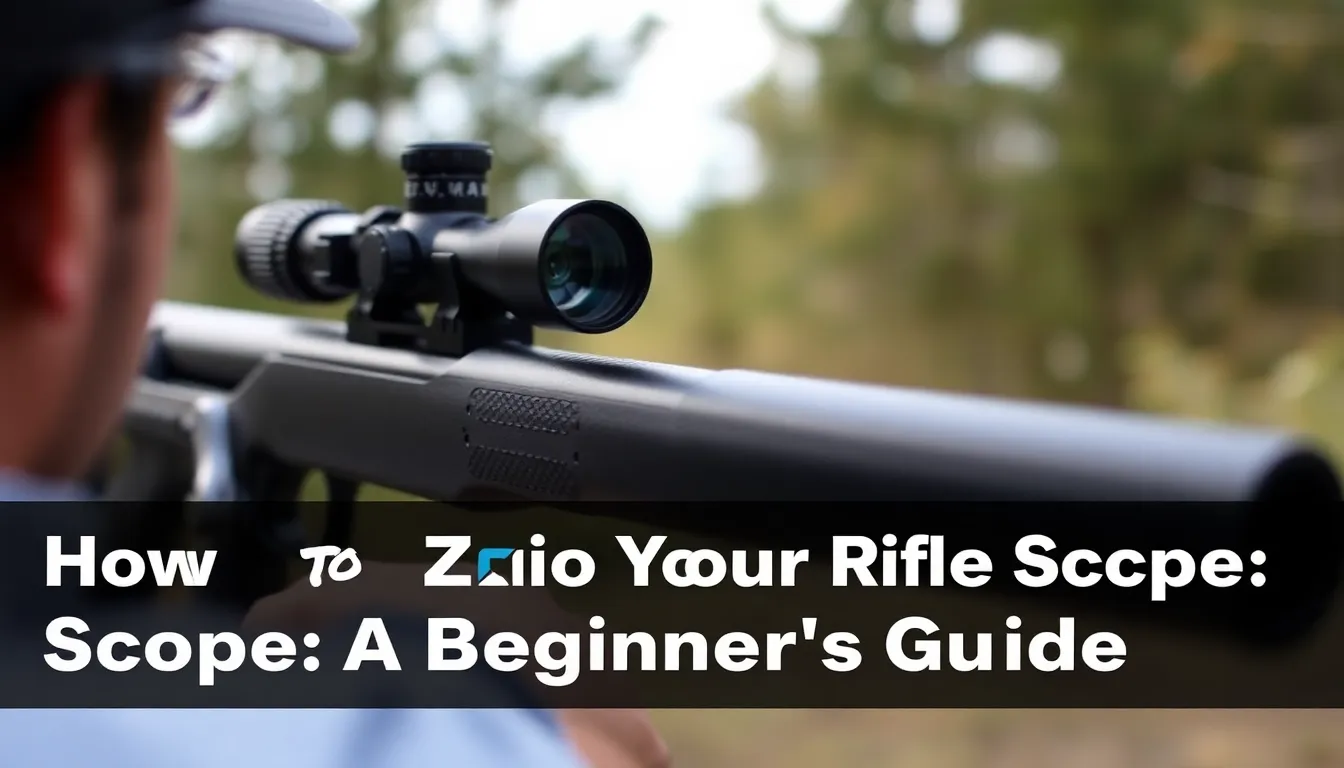
How to Zero Your Rifle Scope: A Beginner’s Guide
Why Zeroing Your Rifle Scope Actually Matters
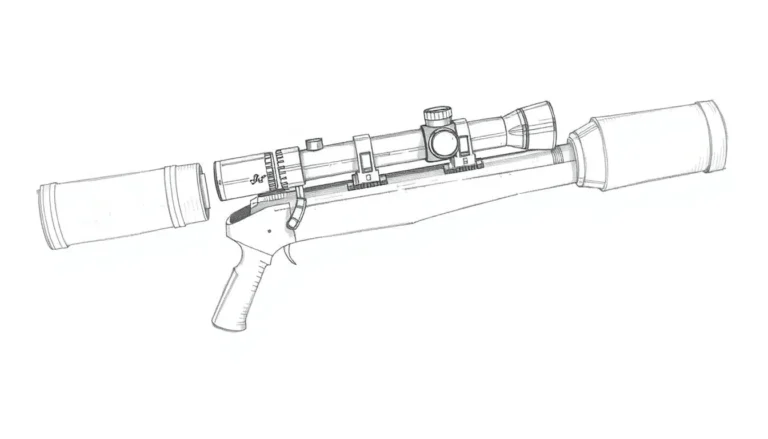
Whether you’re shooting a modern tactical setup, a classic training rifle, or even getting started with a pump air rifle, mounting a scope is only half the battle. Once it’s attached, your optic isn’t automatically ready for accurate shooting. The reticle you see through the lens is not necessarily aligned with where your shots will actually land downrange. That’s where zeroing comes in.
Zeroing simply means calibrating your scope so that your reticle and your actual point of impact match at a specific distance. For example, if you zero at 100 yards, your shots should consistently land exactly where your crosshairs are pointing at that distance. Without a proper zero, you’re essentially guessing — and guessing has no place in responsible, accurate shooting.
It’s also worth understanding that bullets don’t travel in a perfectly straight line. They follow a natural arc due to gravity. This means that once you’ve established your zero at a set distance, engaging targets at longer ranges will require you to compensate for bullet drop. The good news is that a solid, precise zero gives you a reliable baseline to work from, making those longer-range adjustments much more predictable and manageable over time.
Understanding Scope Turrets, MOA, and MIL Adjustments
Before you start turning knobs, it helps to understand what those knobs actually do. Your scope has two primary turrets — one on top controlling elevation (up and down movement) and one on the side controlling windage (left and right movement). Each click of these turrets moves your reticle by a precise, measurable amount, giving you the fine-tuned control needed to dial in a perfect zero.
Most scopes operate in either MOA (Minute of Angle) or MIL/MRAD (Milliradian) increments. MOA-based scopes typically adjust by one quarter MOA per click, which translates to roughly a quarter-inch shift at 100 yards. This system pairs naturally with imperial measurements like inches and yards, making it intuitive for many shooters in the United States.
MIL-based scopes, on the other hand, adjust by 0.1 MIL per click — about 0.36 inches at 100 yards, or a cleaner 1 centimeter at 100 meters. This makes MIL scopes particularly well-suited for metric-based calculations. Neither system is objectively superior; the best choice simply comes down to personal preference and what feels most natural to you. Both will get you to an accurate, reliable zero with a bit of practice and patience.
Preparing to Zero: What You Need and How to Get Started
Good preparation makes the zeroing process smooth and efficient. Before heading to the range, gather everything you’ll need: your rifle and mounted scope, approximately 40 to 60 rounds of ammunition, a stable shooting rest or sandbags, and a quality paper target with a clear aiming point. Having all of this ready in advance means fewer interruptions and a more focused session.
Choose a calm day if possible, since wind can noticeably affect your shots and complicate the zeroing process, especially at longer distances. Start at a shorter range — 25 yards is a popular starting point — to get your shots on paper quickly before moving out to your intended zero distance. This saves ammunition and frustration.
Once you’re set up, fire a small group of shots, then assess where they landed relative to your point of aim. Use your turret adjustments to bring the reticle in line with your group, rather than trying to move individual shots around. Repeat the process, making small, deliberate adjustments each time. With patience and methodical shooting, most shooters can achieve a reliable zero in a single afternoon session. It’s a rewarding skill that immediately improves your confidence and accuracy in the field.
Source: How to Zero Your Rifle Scope
We are a participant in the Amazon Services LLC Associates Program, an affiliate advertising program designed to provide a means for sites to earn advertising fees by advertising and linking to Amazon.com. As an Amazon Associate I earn from qualifying purchases. We also participate in other affiliate programs.